Friday, December 15, 2017

Do You Suffer from SAD This Holiday Season?

Houston -- 10:14

Baltimore -- 9:24

Detroit -- 9:05

The Netherlands -- 7:41

Those are the hours of daylight for each of those locations on December 21, 2017, the Winter Solstice.

I have family members in each of those places. As Houstonians, my wife and I will enjoy the most sunshine. Our son in Baltimore and my parents in Detroit will have roughly the same amount of daylight. Our daughter and son-in-law in the Netherlands, however, will spend more than two-thirds of the day in darkness.

For many people, the shorter days and lack of sunlight that characterize the winter months bring on what might be termed the Winter Blues. We might feel more tired than usual, maybe put on a little weight, or perhaps undergo minor bouts of depression.

Some folks, however, experience more exaggerated forms of these symptoms, a condition known as Seasonal Affective Disorder, or SAD.

For them, the winter months of decreased sunlight or working in buildings without windows cause depression that saps energy and causes work and relationships to suffer.

Aside from Seasonal Affective Disorder, millions of people this month will suffer from another type of SAD, what could be termed Savior-Absent Disorder.
Symptoms of Savior-Absent Disorder include an over-emphasis on presents and parties, the noticeable lack of peace and joy, and a Christmas celebration devoid of Christ.

Savior-Absent Disorder can afflict the young or old, and men and women are equally susceptible.

Those most likely to contract SAD are those whose December schedules run them too ragged to attend a Christmas Eve service at a local church. Others at risk are those who don’t take the time to ponder the words of carols such as "O Come, All Ye Faithful" ("Come, see in the manger our Savior and King!") and "Silent Night" ("Christ, the Savior, is born!").

Long-term effects of SAD include holiday seasons lacking in meaning and even a Scrooge-like resentment toward those who offer a joyous "Merry Christmas!" greeting.

However, there is relief from Savior-Absent Disorder. Not just a short-term pain killer, but a lifetime cure. The treatment is found in the words spoken to shepherds by an angel: "I bring you good news of great joy that will be for all the people. Today in the town of David a Savior has been born to you; he is Christ the Lord" (Luke 2:11).

Possible side-effects of this treatment include the following:
  • a renewed sense of hope (Luke 2:25-35)
  • freedom from guilt and shame (Luke 1:50)
  • an increase of love and compassion for others (Luke 2:16-18)
  • a desire to praise God (Luke 1:46-47; 2:13-14, 20)
If these side-effects persist, keep calm and be grateful. For further information about this cure, contact your local Christian church.

Now with the angel's words to the shepherds in mind, I wish you a Merry Christmas and a SAD-free new year.

Friday, December 1, 2017

Prepare the Way of the Lord

John the Baptizer from Godspell

I've been reading the opening chapters of Luke to get into an Advent and Christmas frame of mind.

This morning I gave thought to Luke 3, which focuses on John the Baptizer.

(I will confess that the Isaiah quote from Luke 3:4 has the Godspell song "Prepare Ye the Way of the Lord" running through my head [and maybe yours now, as well].)

John the Baptizer was a very bold and direct prophet, but also very humble.

He knew he wasn't the Christ and would not pretend otherwise (John 1:20).

He admitted that he wasn't worthy to untie the straps of Jesus' sandals (Luke 3:16).

He understood that he must decrease and that Jesus must increase (John 3:30).

Nevertheless, John was not bashful in his preaching.

He calls the crowds the offspring of serpents, charges tax collectors to stop cheating people, and exhorts soldiers to quit extorting people and making false charges against them (Luke 3:7, 12-14).

Imagine how they felt when John called them out that way! Today John would be called a "hater" and be eviscerated on social media.

John certainly had a different approach than Jesus. No wonder John had his questions and doubts about Jesus while he was prisoner in Herod's dungeon (Luke 7:18-23).

It's tempting to say that we need to be more like John -- bold, in your face. And that may work for some.

However, John's portrayal is descriptive, not prescriptive. In other words, it's not meant to prescribe how we are to act. John's conviction and courage are to be emulated, but his manner of ministry was all his own.

Scripture isn't telling me to set up shop on Buffalo Bayou and cry out to the joggers running past. That's not my calling. I'm a pastor, not a prophet. These are two different callings with two different job descriptions.

On the other hand, Scripture is telling me (and you) to display the courage of John (and Paul and Jeremiah and Isaiah and Jesus) in speaking the truth despite its unpopularity.

We are called to afflict the comfortable with God's law and to comfort the afflicted with God's promises.

In short, like John, we are called to prepare the way of the Lord.

Tuesday, October 31, 2017

Martin the Monk


500 years ago today,
A German monk named Martin
Posted his Theses on a door.
Who knew what he’d be startin’?

We call it Reformation Day.
(Some folks call it Halloween.)
Martin challenged the Roman Church
And he really made a scene.

There was a friar, John Tetzel.
His Indulgences he sold.
Forgiveness of sins they offered
At the cost of just some gold.

Martin the Monk said, “No!” to this.
“Forgiveness is offered free!
It can’t be bought, it can’t be sold.
Jesus earned it on the tree!”

So we give thanks on this, the Day
Of joyful Reformation,
Martin the Monk helped all to see
The free gift of salvation.

Wednesday, October 4, 2017

SMH


Shaking My Head.

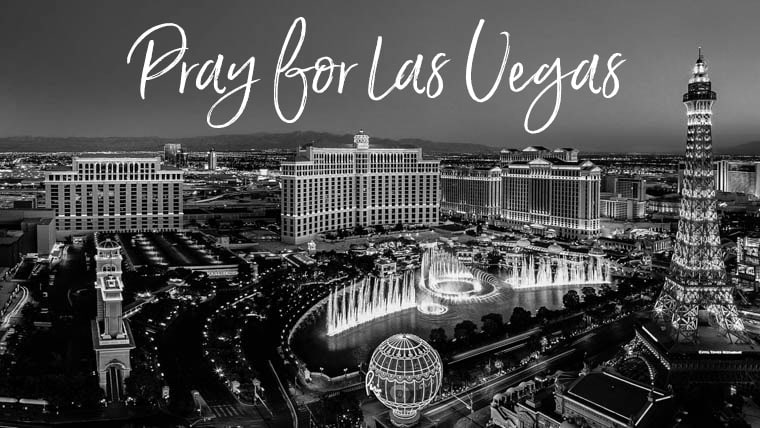
Another mass shooting.

An overwhelming sadness fills the soul ...
of the individual ...
of a community ...
of our nation.

I sit at this keyboard and shake my head.

I tear up when I ponder the victims and the heroes.

I don't ask, "Why?"
That answer is as old as humanity itself.
"Sin is crouching at your door; it desires to have you" (Jesus' words to Cain, urging him to reject anger and hate, Genesis 4:7).
Some people open the door and welcome in Sin.

With disbelief I exclaim, "Not again!"
Columbine. Newtown. Boston. Orlando. (To name only a few...)
Not again!

In weariness I ask, "How long?"
I add my voice to the souls of the martyrs.
"How long, Sovereign Lord, holy and true, until You judge the inhabitants of the earth?"

I am told, "Wait a little longer" (Revelation 6:10-11).

I am promised, "My grace is sufficient for you" (Jesus to St. Paul when he pleaded to be delivered from a personal affliction, 2 Corinthians 12:9).

I am assured, "In this world you will have trouble. But take heart! I have overcome the world" (Jesus to His disciples on the night of His betrayal, John 16:33).

My head may shake.

But faith need not be shaken.

Faith, in fact, is proven in times like this.

Faith is proven in its love for the grieving and its care for the hurting.
People of faith "shine like stars in the universe as [they] hold out the word of life" in defiance of violence and death (Philippians 2:15-16).

Faith is proven in its conviction that our God is bigger than the trials and tragedies we face.
"We know that in all things God works for the good of those who love Him" (Romans 8:28).

Faith is proven in its confidence that love is stronger than hate, and God's love is stronger than anything.
"I am convinced that neither death nor life, neither angels nor demons, neither the present nor the future, nor any powers, neither height nor depth nor anything else in all creation, will be able to separate us from the love of God that is in Christ Jesus our Lord" (Romans 8:38-39).

Your head may shake.

Your faith need not be shaken.

Friday, August 11, 2017

It's Not About "Deserve"

Since its release on June 2, I have had the opportunity to see "Wonder Woman" three times.

The first was at the Portage 16 in Portage, Indiana. (They should name one of the sixteen screens after our family for all the movies we saw and popcorn I ate there over the years.)

The second was in Houston at the Studio Movie Grill near our home. (I'm working on earning my dedication plaque at this theater, also.)

The third viewing was in Panama City Beach, Florida, on a visit to our newly married daughter and son-in-law. (Yeah, it's been a well-traveled and eventful summer.)

Aside from finally viewing a DC superhero movie that didn't disappoint, I also appreciated a message in "Wonder Woman" that communicates the clear message of the Gospel.

This message revolves around the theme of "deserving."

In one scene, WWI soldier Steve Trevor and his two friends offer this toast: May we always get what we need. May we always get what we want. May we never get what we deserve.

One might think that this is just a throwaway dialogue to lighten the mood, but there may be more to it than that.

Later in the movie, a conversation between Steve and Diana (aka Wonder Woman) revisits the theme of "deserving". When Diana questions why Steve is so determined to help people who don't deserve it, he responds, "Maybe it's not about deserving. Maybe it's about what you believe."

Diana, who is still trying to make sense of a world that she has only recently entered, ponders that thought.

Then, in the lead-up to the climactic battle scene against Ares, the god of war explains that he doesn't cause mankind to be warlike. He merely whispers ideas and then allows people to respond as they will. His argument is that people tend to choose the evil over the good.

And in the final battle, he punctuates that point when he shouts at Diana, "They don't deserve to be saved!"

In response, Diana echoes Steve's words, "It's not about deserve. It's about what you believe. And I believe in love."

I can hear the voice of Satan, the Accuser, in Ares' words. Satan levels the same accusations against humanity as Ares did. The devil doesn't make us do anything, although he certainly whispers his lies into our willing ears. We, however, choose how to respond. Because of our inclination to choose the evil over the good, we don't deserve to be saved.

Nevertheless, Jesus responds that it's not about deserve. It's about love, His divine love for us undeserving ones.

In the church, we call that grace, when we get what we don't deserve.

We didn't deserve a Savior who would suffer and die for us on the cross. We don't deserve Jesus' forgiveness when one of His followers assures us that we are absolved of our sins. We don't deserve a place at the altar to receive the body and blood of Jesus for the remission of our sins.

But it's not about deserve. It's about love. Only through Jesus' undeserved love can we have a new life with Him.

In a sense, Steve's toast with his friends echoes the prayer Jesus taught us: Give us this day our daily bread. (May we get what we need. May we get what we want.) And  forgive us our trespasses. (May we never get what we deserve.) Amen.

Tuesday, May 30, 2017

Water in the Name of Jesus

“I was thirsty and you gave me something to drink.”

According to Matthew 25:35, that’s what Jesus will say to the righteous gathered before Him on the Last Day.

Well, if Jesus commends giving water to the thirsty, that’s good enough for me.


That’s why our congregation, Messiah Lutheran, Houston, TX, has cases of bottled water with our church’s name and website address on the label, to give out to folks who are thirsty.

Our Congregation President, John, and I did just that at the May 4th Golf Tournament hosted by my local Kiwanis Club.

He and I spent time with about 90 golfers from across the Houston area and gave out free water at the Messiah tent at the first hole.

After the event, John and I decided to give out the remaining water bottles the next day at Memorial Park.

We found ourselves a shady spot alongside the running path and in a matter of 45 minutes we gave out 80+ bottles of water.

One fellow that we met had finished his run and sat down to enjoy the water and the shade. He took note of the Messiah name on the label and asked us about our church and its location.

One woman, when offered a bottle, replied, “What’s the catch?” John assured her that, much to her surprise, there was no catch at all.

That simple gift of water put smiles on lots of faces on a warm Friday afternoon.

An Easy Thing to Do
Approaching a stranger with the words “Let me tell you about Jesus” is very intimidating, let me assure you. It’s so intimidating that I don’t do it. Ever.

But to ask a stranger who’s walking or running past you, “Would you like some water?” is an easy thing to do.

When Jesus commends the righteous in Matthew 25, He doesn’t say, “You preached the Gospel,” or, “You knocked on strangers' doors.”

He says, “You fed, you gave water, you clothed, you cared, you visited.”

Those are all easy things to do. Every one of us, no matter our age, is capable of offering such Christ-like care.

And when you offer the food, the water, the clothing, or the care, and are asked, “What’s the catch?” you can respond that there is no catch, that you are simply doing what Jesus taught you to do.

Friday, May 5, 2017

The Dreaded Four Horsemen

The Four Horsemen of the Apocalypse. These imposing and dreaded figures have been woven into the fabric of our popular culture.

Cover of Teen Titans #37
World Championship Wrestling had its Four Horsemen, including wrestlers Ric Flair and Arn Anderson. Marvel Comics has a character named Apocalypse who always has four proteges, his Four Horsemen.

I first encountered the Four Horsemen at the tender age of eight in Teen Titans #37 back in 1971. (You can find out about the story at this link.)

Regardless of their pop culture presence, the Four Horsemen of the Apocaplypse come to us courtesy of Revelation 6.

In this chapter, the Lamb Who Was Slain has been given the Scroll with Seven Seals. As he breaks each of the first four seals, a horseman comes forth. They can best be described as personifications of tyranny, bloodshed, famine, and death.

As they wreak their havoc on the earth they illustrate sinful mankind's desire to dominate the weak, shed the blood of the innocent, and exploit the poor, all of which lead to death and the grave.

The ravages of these Horsemen are all too familiar to us. All we need do is watch the evening news. Stories of oppression overseas, violence in our neighborhoods, and corruption in our cities weigh us down with despair. "Will it ever end?" we cry in desperation.

Even the saints in heaven express their impatience. As the fifth seal is broken, the souls of the martyrs ask, "How long until our blood is avenged?" How long, O Lord, will Your Church on earth suffer at the hands of its enemies? How many more must die for the faith?

And then comes the end. The sixth seal is broken and creation as we know it is torn to shreds.

Close the curtain. Dim the lights. The show is over.

Revelation 6 is a chapter that causes people to not want to read Revelation. It's bizarre in its imagery and frightening in its content.

But what appears on the surface to be a picture of hopelessness transforms into a picture of hope when we remember one important detail. Jesus, The Lamb Who Was Slain, is the one breaking the seals. None of the events that follow the breaking of the seals are outside of the authority that the Father has given to His beloved Son (Matthew 28:18-20).

The Four Horsemen released by Jesus operate under His sovereign lordship. They are not "running out of control." They are under the control of Jesus.

The souls of the martyrs are urged to be patient. Although more martyrs will be added to their number, each of those deaths is precious and even costly to their Lord, who shares in the persecution of those who make up the Church, the Body of Christ on earth (Psalm 116:15 and Acts 9:4-5).

Even the earth's destruction, which was foreshadowed in the darkness and earthquake of Good Friday (Matthew 27:45-54), will result in the New Creation where the followers of Jesus will enjoy an eternity free from suffering and death.

So do not despair.

Far from a vision of hopelessness, Revelation 6, and the entire book for that matter, speaks God's final Word of comfort, hope, and victory.

Jesus Himself promises the crown of life to those who are not shaken by the events which must take place but instead remain faithful unto death (Revelation 2:10).